Back to All Articles
Avoiding Medicare Fraud

Kat Gardner
- Original Medicare

Scams, data breaches and fraud are constant dangers in our digital age. Millions of dollars are lost to fraud cases per year. The vitality of protecting all personal information is at an all-time high. Medicare recipients are often vulnerable to fraud and abuse, which can include having your Medicare Beneficiary Identifier (MBI) or Social Security numbers stolen.
With that in mind, we gathered a list of best practices on how you can:
- Protect yourself and others from Medicare fraud
- Spot and report fraudulent behavior with your Medicare plan
Signs of Medicare fraud
- Getting calls asking you for your MBI. Medicare will never contact you for your Medicare number or other personal information unless you’ve given them permission in advance.
- A “Medicare representative” offering money or gifts for free medical care. Medicare representatives will never call you about free gifts or rewards. When in doubt, ask yourself if it seems too good to be true. Because if it seems that way, it probably is.
- Someone calling you as a representative of the Centers for Medicare & Medicaid Services (CMS) to sell you Medicare. Medicare will never call you to sell you anything.
- Anyone visiting your home claiming to represent CMS. Medicare will never visit you at your home.
- Receiving an offer for free medical equipment or services sponsored by CMS or another nongovernmental authorized provider. Again, official Medicare representatives are not going to call you out of the blue and offer you free items or services.
- Finding multiple charges on your medical bills for the same service. This is a red flag for Medicare fraud and should be reported to CMS.
- Identifying a dollar amount difference between your account charge and the medical bills you received. Overcharging you or your Medicare coverage is a sign of fraudulent behavior.
How you can protect yourself from Medicare fraud and theft
- Guard your Medicare card like it’s one of your grandchildren. Medicare cards are personal information. Treat them like you would your Social Security card, passport or driver’s license. Keep it a secret; keep it safe.
- Don’t carry your Medicare card unless you will need it. You don’t want to carry sensitive information on you in all situations. Use your judgment on when to carry it and how to store it at home so you don’t misplace it.
- Use a calendar to record all your doctor’s appointments, any medical tests and procedures. This not only helps with remembering appointments beforehand, but it can also help you identify potential issues with billing invoices.
- Understand COVID-19 coverage. Medicare covers COVID-19 vaccines at no cost to you. If anyone asks for your Medicare number to get the vaccine or for a free COVID-19 test, it is likely a scam.
- Understand your Medicare coverage and what is included in your plan before you join. Understanding your coverage can help you identify fraudulent claims and determine your ideal coverage options.
- Don’t let anyone convince you to see a doctor for a service you don’t need. Did you know that seeing doctors for services you don’t need could be considered fraud? If fraud is suspected, the claim could be denied and leave you to pay the bill.
- Regularly check with your Medicare provider for your medical bill statements and check your claims for any suspicious activity. The best way to detect potential problems is to be vigilant about your bills and claims. This is also a great way to ensure you don’t miss a copay or fee.
- Limit the amount of people who have access to your Medicare information. Things like passwords, account numbers and prescription details should be treated as private information and not shared freely with those outside of your trusted loved ones.
- Limit who has access to your Medicare card, Medicare number, bank account information, Social Security card or Social Security number. Personal, private information can give thieves the tools to steal your identity and leave you in real trouble.
- Don’t leave your Medicare number in a phone message, such as a voicemail or text, or over email. These are not considered secure methods of exchanging information and doing so could leave you vulnerable to cyberattacks. Be prudent in how you share any personal information.
- Don’t allow anyone, except your doctor or other Medicare providers, to review your medical records or recommend services. HIPAA laws regulate who can request your personal information from your doctors, meaning you must give written consent for anyone to review your treatment — even family members. Use that same scrutiny when determining who you share information with by having a zero-share policy.
How to report Medicare fraud
If you have spotted Medicare fraud, the first thing you will want to do is contact your provider’s office to ask about it. This can help with understanding if the bill is legitimate or if a billing error has occurred.
If you suspect that Medicare is being charged for an item or service you didn’t get, or your Medicare card or number is stolen, use the contact information below to report suspected fraud or abuse.
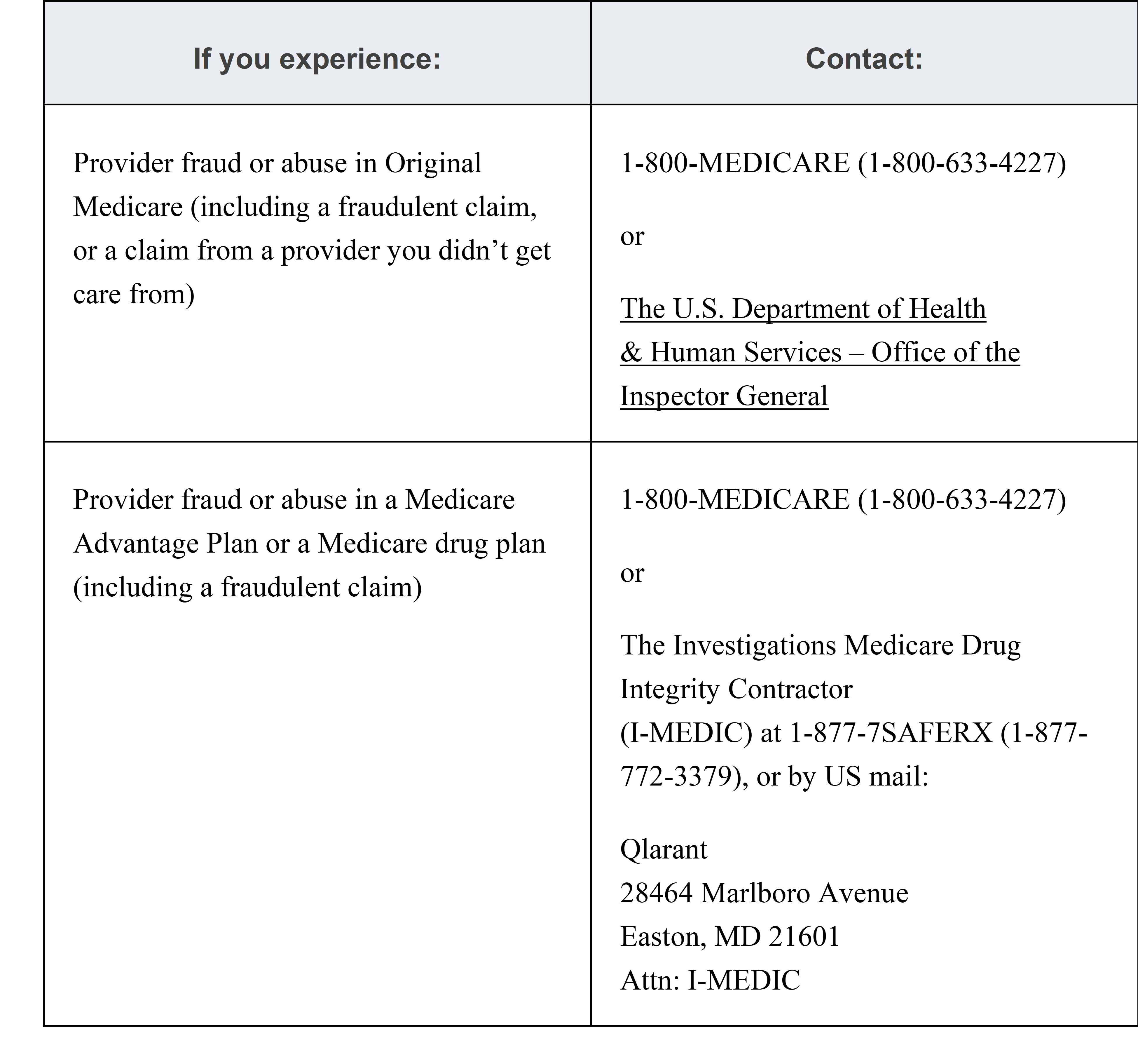
Important: Have this information ready when you call, as you will be asked to provide the following:
- Your name and Medicare number.
- The name of the provider that you’re reporting, along with any identifying information you may have.
- The service or item you’re questioning and when you supposedly got it.
- The amount that Medicare approved and paid.
- The date on your Medicare Summary Notice, health or drug plan’s Explanation of Benefits, or claim.
Keeping your Medicare safe
We hope these tips give you some information and ideas on how you can best avoid Medicare fraud. But if you ever suspect fraud or have a concern about a discrepancy with your account, report it immediately!
Got questions about Medicare? PlanEnroll is here to help! Our team of licensed insurance agents can help you navigate any Medicare questions or concerns, including concerns of fraud. Give us a call to speak to an agent today!
PlanEnroll is a brand operated by Integrity Marketing Group, LLC and used by its affiliated licensed insurance agencies that are certified to sell Medicare products. PlanEnroll is not endorsed by the Centers for Medicare & Medicaid Services (CMS), the Department of Health and Human Services (DHHS) or any other government agency.

Ready to find coverage in your area?
View Medicare coverage options in your area
Get personalized guidance
Connect with a licensed insurance agent1-855-700-8583Or have an agent contact youContinue Reading