Back to All Articles
Life Insurance Frequently Asked Questions and Misconceptions

Andrea Feucht
- Final Expense Types
- Final Expense
- Life Insurance

When we hear the words “life insurance,” it’s easy to make assumptions based on what we have heard from other people or read over the course of many years. Some questions may come to mind when you think about life insurance, including who it’s for and when to consider a plan.
We’re here to take a look at Frequently Asked Questions about life insurance, while also digging into some common misconceptions, answering questions with clarity.
FAQ #1: What Does Life Insurance Cost?
The cost of life insurance varies widely based on factors such as age, health, coverage amount and the type of policy you choose. There are three primary types of life insurance: Term Life, Permanent Life and Final Expense insurance.
- Term Life Insurance: This provides coverage for a specific term, like 10, 20, or 30 years. It's typically more affordable since it focuses solely on providing a death benefit. Premiums increase with age but remain relatively steady throughout the term.
- Permanent Life Insurance: This includes Whole Life and Universal life policies. It offers a death benefit as well as a cash value component that grows over time. As a result, premiums are higher, but the policy builds cash value that you can access during your lifetime.
Final Expense Insurance: Also known as burial or funeral insurance, this is a specialized type of life insurance designed to cover the costs associated with a person's funeral and other final expenses. It is typically a form of Whole Life insurance with a lower death benefit, intended to cover these specific costs.
The costs of each type of life insurance ranges widely and can be far more affordable than you think. It’s best to consult with a licensed insurance agent that you trust to find out what is available based on your needs.
FAQ #2: Is Life Insurance Only for Parents?
Contrary to what many people believe, life insurance isn't exclusively for parents. While it's crucial for parents to secure their children's future, life insurance can benefit anyone with financial responsibilities.
If you have dependents, debts or upcoming expenses, or anyone who relies on your income, life insurance ensures they're protected financially if you were to pass away unexpectedly.
FAQ #3: When Might it Be Too Late for Life Insurance?
It's never too early to consider life insurance, but there's a point where it can become challenging to obtain affordable coverage. Premiums are typically lower when you're younger and healthier. As you age, health issues may arise, making insurance more expensive or even unattainable.
It’s a good move to secure life insurance as soon as you realize you’d like the benefits of a policy. This can help to ensure lower costs (compared to starting a policy in the future) and guaranteed coverage.
Life Insurance Common Misconceptions
- Life Insurance Is Only for the Wealthy: Life insurance is accessible to people across various income levels. Its purpose is to provide financial protection, and even a modest policy can go a long way in safeguarding your family's future.
- Employer-Provided Life Insurance Is Enough: While many employers offer life insurance benefits, they can often cover only a fraction of what your loved ones might need. Relying solely on employer-provided coverage might leave your family underinsured.
- Stay-at-Home Parents Don't Need Life Insurance: A stay-at-home parent's contributions are often undervalued. They provide childcare, household management and more. If something happens to them, the surviving spouse might need financial assistance to cover these responsibilities.
- Funeral Costs Are “No Big Deal:” The last thing anyone wants to worry about is how to finance a funeral when a loved one passes away. According to the National Funeral Directors Association (NFDA), the median cost of funerals with a viewing and burial was around $7,848 in 2021. Final Expense coverage can save your loved ones the costs after your passing.
Little-Known Facts About Life Insurance
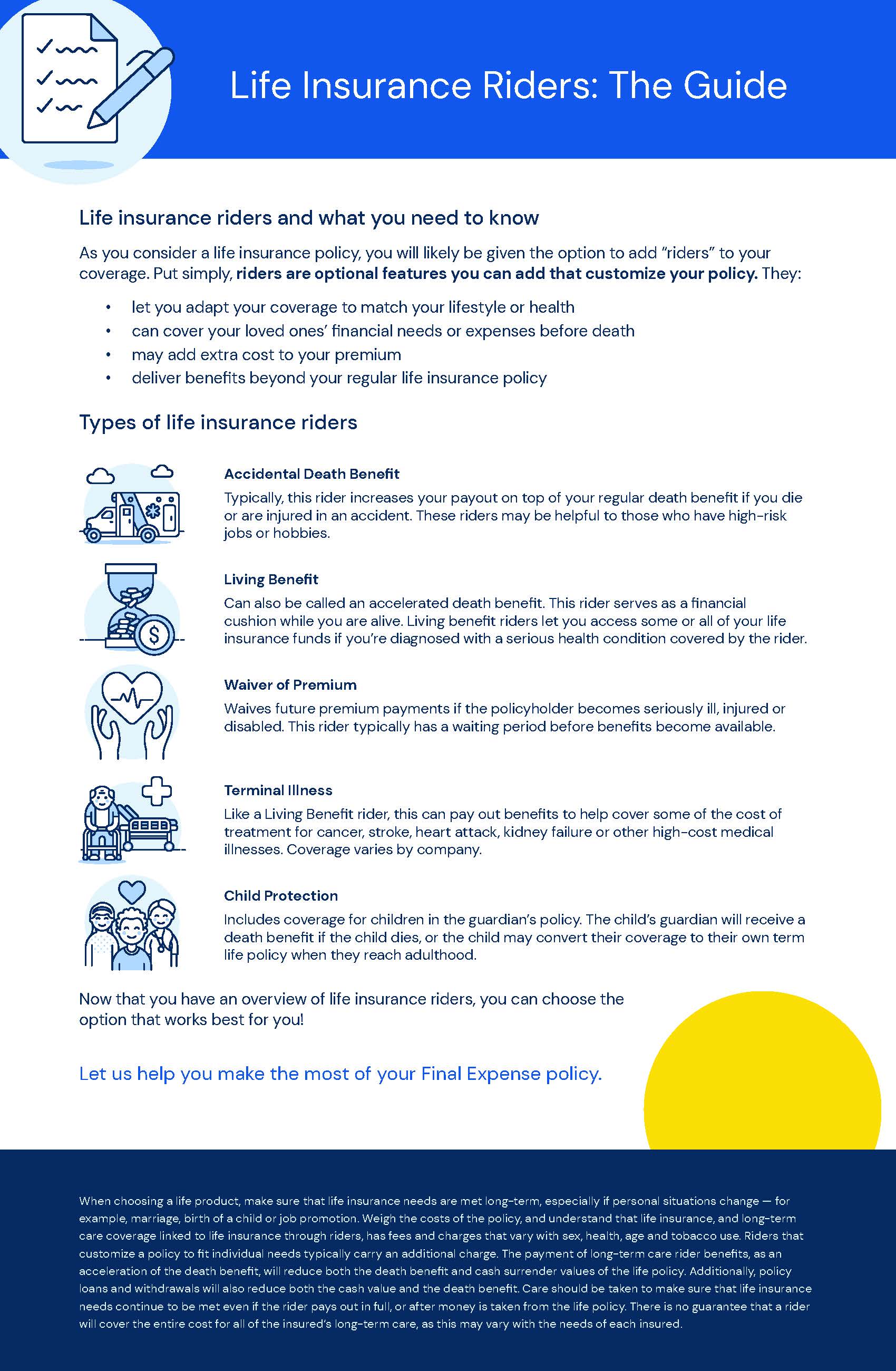
- Living Benefits: Some life insurance policies offer living benefits, allowing you to access a portion of the death benefit while you're still alive if you're diagnosed with a terminal illness or require long-term care.
- Policy Riders: Policyholders can customize their coverage with riders. Examples include a waiver of premium rider, which waives premiums if you become disabled, and an accelerated death benefit rider, which allows you to access a portion of the death benefit for medical expenses.
- Cash Value Growth: Permanent Life insurance policies accumulate cash value over time. This cash value can be borrowed against or withdrawn, providing a financial cushion or supplementing retirement income.
Why Would You Consider a Life Insurance Policy?
- Financial Security: Life insurance ensures that your loved ones are financially secure, even when you're not around to provide for them.
- Debt and Expenses: Your debts, mortgage and other financial obligations don't always disappear with your passing. Life insurance can cover these expenses, preventing your family from inheriting your financial burdens.
- Estate Planning: Life insurance can facilitate a smoother transfer of wealth and assets to your beneficiaries, potentially reducing estate taxes.
- Charitable Contributions: If you're philanthropically inclined, you can designate a charity as your policy's beneficiary, leaving a lasting impact.
- Costs Associated With Funeral and Burial: Final expenses can be higher than you think, and this kind of policy can save your loved ones some stress and financial burden.
Life insurance is an important financial tool that provides increased security and peace of mind for you and your loved ones. Remember, life can be uncertain, but life insurance can help ease some worry.
By understanding the common misconceptions around life insurance, you can make an informed decision to secure your family's financial well-being. Want to know more? Reach out to one of our licensed agents to find out which kind of life insurance is right for your unique stage of life.
Final expense life insurance can be used by the beneficiary designated as needed rather than being limited to specific funeral services and providers. Final expense life policies will have a lower face value than most traditional term or whole life policies as they are intended for a specific purpose of covering those final costs rather than providing comprehensive support for surviving family members. This type of policy generally doesn’t require a medical exam, but premiums will be higher the older you are, and some benefit payouts may be limited during the first few years of coverage for those with significant health issues. Reducing or skipping premium payments will impact the amount of interest paid and may impact how long the policy lasts. Accessing the cash value of a policy will reduce the available cash surrender value and the death benefit. Policy guarantees are based upon the claims-paying ability of the issuing life insurance company.
Reducing or skipping premium payments will impact the amount of interest paid and may impact how long the policy lasts. Accessing the cash value of a policy will reduce the available cash surrender value and the death benefit. A policy owner does not have the ability to make unlimited payments into the policy. If too much is paid into the policy, it will become a Modified Endowment Contract (MEC) and withdrawals and loans will be taxable. Policy guarantees are based upon the claims-paying ability of the issuing life insurance company.

Ready to find coverage in your area?
View Life Insurance coverage options in your area
Get personalized guidance
Connect with a licensed insurance agent1-855-700-8583Or have an agent contact youContinue Reading